
Sub-Total: $0.00
The Reikist
The Cage Was For Me
How one jaguar changed the way I think about animals in human care.

National Tiger Day July 29
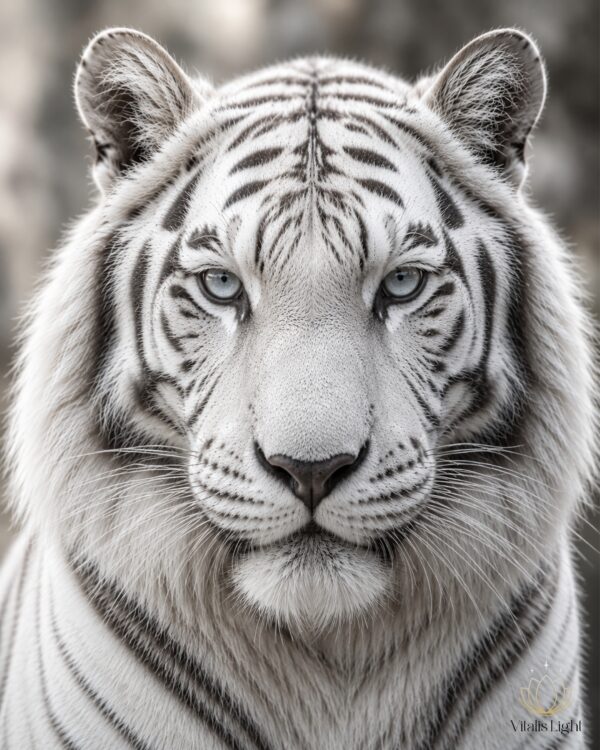
Every year National Tiger Day fills my screen with beautiful photographs and sobering numbers about a species disappearing from the wild.
When I think about big cats, I do not think about tigers.
I think about a jaguar named Junior Buddy.

Belize, 2012
I rarely go to zoos. Watching a wild animal live out its life behind glass so that I can look at it has never sat well with me. I only went because I had been told it was not a zoo at all. It was a sanctuary.
I understood why the moment I walked through the gate.
Nature had not been recreated there. Nature was already there.
The zoo sits in the middle of the jungle, and we were told the wild animals were allowed to come and go as they please. Nothing is built to keep them out. Iguanas and agoutis wandered the pathways like they owned them, and wild birds moved through the property as freely as they moved through the forest beyond it. The fences exist to keep the residents in, because the residents are the ones who cannot survive out there. The wild is welcome, and it visits.
The enclosures are sections of standing jungle with fencing around them, and the paths between are gravel cut through the same forest that grows on the other side of the property line. No concrete. No painted backdrop. No fake rock. Every animal on the grounds is native to Belize, and every one of them arrived because something had already happened to it.
It started in 1983 with seventeen animals nobody wanted.
An American biologist named Sharon Matola had come down to work as an assistant on a wildlife documentary, hired to look after the animals used in the filming. When the film wrapped and the funding ran out, the company sent word to get rid of them. They were tame, used to people, and had no chance on their own. Matola later said that she had two choices. She could shoot them, or she could take care of them.
She chose the second, and kept choosing it for thirty-eight years.
The Belize Zoo did not exist to collect animals. It existed because animals had already needed somewhere to go.
How Buddy came to be there
His mother, called Springfield after the village where she was trapped, was pulled off a sheep farm in the Cayo District. I remember the keeper telling us it was a Mennonite farm, one of the farming communities out that way, and that she had been killing sheep. Farmers there lose livestock to jaguars, and a jaguar who learns that sheep are easy does not unlearn it. The zoo calls them problem jaguars, which usually means an animal old enough, injured enough, or sick enough that wild prey has become too much work, so livestock starts looking easy. The plan was to move her somewhere far from any farm.
Nobody knew she was pregnant.
She gave birth at the zoo and rejected the cub, so he was raised by human hands. That decided the rest of his life. An animal raised by people has no fear of people, and a grown male jaguar with no fear of people cannot be released anywhere near a farm. He would have been dead within a season, or somebody else would have been.
So he stayed.
He became the most recognizable jaguar in the country. Schoolchildren arrived by the busload. He had birthday parties. He was probably bigger than most jaguars in the wild, having been fed every day of his life. He spent his whole life as an ambassador for a species most Belizeans would never see in the wild. The keepers told us he was a national treasure, and that he was the jaguar on the money. There has been a jaguar on the Belize twenty-dollar bill for decades, and as far as they were concerned, it was him.
The encounter
A keeper asked whether my then fiancé and I would like to meet him. Of course we said yes.
I assumed we would stand at the fence while Buddy stayed on his side of it. The opposite happened.
They moved him into a back area, walked us through a side gate into his enclosure, which is jungle, and shut us into a small steel cage inside it. There was a bench to sit on. This, I imagine, is what it feels like to be lowered into the ocean inside a shark cage. Except the ocean was jungle, and the shark knew we were coming.
For the first time in my life, I was not looking at a captive animal. I was the one behind bars.
The keeper had a bucket of raw chicken. He gave a sharp whistle, pointed, and quietly said, look.
Seconds later the jungle came apart, and a jaguar was running straight at us at full speed.
For one long moment you forget there is a cage. There is no cage. There is only a machine of death coming at you through the trees, and every animal instinct you own firing at once. Then all of that muscle left the ground, immense and impossibly graceful, sailed over our heads, and landed on the roof of the cage with almost no sound at all.
That silence is the part I still think about. I imagine it is the last thing prey ever notices. Nothing, and then everything.
Then he came down, and everything I had braced for turned into something else. He rubbed his face along the wire like an oversized house cat. He took a serious interest in my fiancé, bald and sweating in that heat, and licked the top of his head with a tongue rough enough to take skin off. We laughed until we cried. We fed him through the mesh. I reached up and touched the pad of one enormous paw and watched the claws slide out and disappear again.
Twenty minutes, eye to eye with one of the most powerful predators on earth.
I did not walk out of there thinking jaguars were pets. I walked out understanding exactly how wild he was.
None of it was a favor or a rule being bent. It was a program the zoo published and ran, four people at a time, and the money went to the commissary that feeds every animal on the property.
When we got home, we got matching tattoos of Buddy himself, one on each of our legs. The engagement did not last. The jaguar did.
Then came 2020
Eight years later, a locked-down world sat down to watch Tiger King.
I almost did not. I have been an animal activist since I was twelve, when punk music taught me about injustice, and animal liberation was part of the message. I could see what this was going to be. Most people watched for the personalities, the feuds, and the sheer number of spouses. I watched the animals in the background of every shot, and I hoped, without much confidence, that all of that attention might finally drag this issue into the light.
Here is the fact I keep coming back to. There are more tigers in cages in the United States than there are left in the wild anywhere on earth.
Roughly 5,574 wild tigers remain across all thirteen countries where they still exist. The American captive population sits somewhere between five and ten thousand, and nobody can be more precise than that, because no registry has ever been able to count them. About six percent live in accredited zoos. The rest are in backyards, roadside attractions, and breeding operations.
So did any of it help?
It did. In December of 2022 the Big Cat Public Safety Act became law. Private ownership of lions, tigers, leopards, cheetahs, jaguars, and cougars is prohibited. The law took the legal ground out from under the cub-petting business, the operations that bred cubs every season for photographs and discarded them at four months old.
The documentary did not do that. People had been working on that bill for twenty-five years, and most of us had never heard the name of a single one of them. What the attention did was finish it.
I will take it.
What no law can do is empty the cages that already exist. Those thousands of tigers are alive right now, in the same yards they were in, and most of them will die there.
What the law changes is the next generation. The cubs that would have been bred this season for photographs were not bred. That is the whole of it, and it is not nothing.
The question I ask now
Belize did not give me an answer. It changed the question.
The question is not whether a wild animal lives behind a fence. The question is why that animal is there.
Every animal at the Belize Zoo can answer it. A film crew left them behind. A car hit them. A farmer trapped them. A mother walked away. Not one of them was acquired.
Every enclosure tells a story. Not every enclosure tells the same one.
I have stood in front of a lion at an amusement park, surrounded by roller coasters and corn dogs, and found myself wondering what story brought that lion there. I did not have an answer. I am not sure anyone offered one.
Then there is the cow in Brooklyn. The Prospect Park Zoo keeps a working barn, in an exhibit called Animals in Our Lives, with cows, sheep, goats, and geese. For a while the largest animal in the entire zoo was a dairy cow named Tetley, and they expanded the pasture for her. Children who will never otherwise stand next to a cow can stand next to that one and hold out a handful of grain.
That cow has a reason to be there, and just as important, that cow is not a wild animal. A cow is a domestic animal, bred alongside people for thousands of years. Keeping her in a barn takes nothing wild out of her, because there is nothing wild to take. The lion is a different matter entirely. That is the distinction I am drawing, and it is the one that rarely gets drawn.
I am not arguing that every zoo should close. I have spent my life in animal care and I know what becomes of animals with nowhere to go. There are accredited institutions doing serious work in conservation and veterinary medicine, some of them breeding endangered species whose captive populations are now the hedge against extinction, and there are animals who can never go home. What I want is fewer of them, better, and honest about why.
What I carry
Reiki gave me language, years afterward, for something I had already experienced in that cage.
Buddy had every reason to stay in the trees. Nothing made him come. He came because he wanted to, stayed as long as he wanted to, and when he was finished he walked back into the jungle that was his. The gate between us was there to protect me from him. He was the one making the choices.
It is also why some of my work never has an invoice attached. I offer Reiki to rescues at no charge, and I have sat sessions for zoo animals over their live webcams, free, from my own living room. Nobody asked me to. It is my way of giving something back to the animals who gave me all of this.
Reverence starts at the moment an animal stops being an attraction and becomes an individual with a history you will never fully know.
Buddy died of heart failure in December of 2019. I did not find out for years.
Every morning when I pull on a pair of shorts, there he is on my leg. I got the tattoo because for twenty minutes an animal who owed me nothing decided to come and see what I was.
National Tiger Day is what brought me back to this. A jaguar is what gave it to me.
I went to Belize hoping to see one. I came home having seen something rarer. A place built on the idea that wildlife does not exist for our entertainment, and goes on existing whether or not anyone is watching.
Twenty minutes of his life crossed paths with mine. That was always more than enough.
I did not get the tattoo to keep him.
Nobody keeps a jaguar.
National Tiger Day is observed on July 29, established at the 2010 Global Tiger Summit in St. Petersburg by the thirteen countries where wild tigers still live. Your call whether to put it back — the header now carries the date.
Carrie K Kelley is a Reiki Master and Animal Reiki Practitioner, certified in 2016, with over thirty years in animal care. She practices traditional Japanese Usui Reiki and is the founder of Vitalis Light. Reiki is offered as a complementary practice, always alongside veterinary care, never as a replacement for it.
First published July 2026